

Rail Guided Electric Transfer Carts: Essential Equipment For Heavy Duty Transport Empowering The Efficient Upgrade Of Industrial Logistics
In the realm of industrial material transfer, the rail guided electric transfer cart stands as a core piece of essential equipment. Leveraging its fundamental strengths—stability, efficiency, and heavy-load capacity—it is widely deployed across diverse sectors such as metallurgy, mechanical manufacturing, warehousing and logistics, and power construction. It has effectively become a "logistics hub," serving to bridge workshops and interconnect production lines. As the drive toward intelligent manufacturing continues to accelerate, this seemingly simple rail-based transport device is undergoing continuous technical iteration and optimization to adapt to an ever-expanding array of specialized scenarios, signaling a steady upward trajectory in the industry's development.
The rail guided electric transfer cart—also known as a rail transfer cart or electric platform cart—is an electric, rail-bound in-plant transport vehicle that operates along fixed tracks. Its primary objective is to resolve the challenges associated with short-distance, heavy-load transfers both within and between workshops. Compared to traditional material-handling equipment, this vehicle possesses distinct and highly targeted characteristics that make it perfectly suited for the demands of industrial heavy-duty transport. Structurally, it features a simple and compact chassis design devoid of complex steering mechanisms; it retains only the fundamental directional controls for forward and reverse movement, relying entirely on the rails for guidance during turns. This streamlined construction renders the vehicle robust and largely impervious to adverse external environmental factors, such as workshop dust and debris. Operation is both flexible and convenient, offering multiple control modes—including handheld pendant, wireless remote, or ground-based console control—making it easy for novices to master. Furthermore, its minimal component count simplifies routine maintenance and servicing, resulting in maintenance costs significantly lower than those associated with traditional handling equipment.
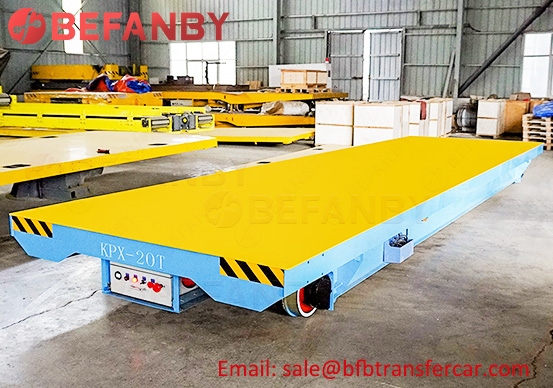
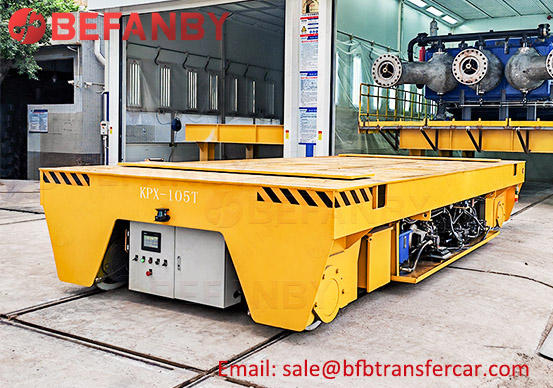
In terms of core competitive advantages, the rail guided electric transfer cart stands out prominently, emerging as a pivotal choice for industrial enterprises seeking to reduce costs while enhancing efficiency.
First, it boasts a robust and wide-ranging load-bearing capacity; standard tonnage options range from 5, 10, 16, to 20 tons, with the capability to carry heavy loads reaching up to several hundred tons. This versatility allows it to transport everything from small components to massive equipment—such as heavy-duty machine tools, steel coils, and transformers—thereby meeting the diverse heavy-duty transport requirements of various industries.
Second, it delivers exceptional operational stability and precise positioning. By traveling along fixed rails, it effectively mitigates vibration and lateral deviation during transit, achieving a positioning accuracy of ±1–2 millimeters. This precision enables seamless alignment with workstations and storage racks, thereby drastically reducing the risk of material damage caused by bumps or collisions—a capability particularly well-suited for scenarios demanding high transfer precision, such as those found in the precision electronics and aerospace sectors.
Thirdly, the system is eco-friendly, energy-efficient, and highly reliable. Utilizing electric propulsion, it generates zero exhaust emissions during operation and maintains noise levels below 65 decibels, thereby meeting modern industrial environmental standards. Furthermore, it is equipped with multiple safety mechanisms—including electromagnetic braking, leakage protection, and collision warning systems—while the rail-based power transmission system operates at a safe voltage of 36V, rendering the risk of electric shock virtually negligible. With its rapid start-stop response capabilities, the system significantly mitigates safety hazards associated with industrial material handling. Moreover, the system demonstrates exceptional operational efficiency, enabling continuous workflow. Following its adoption by a major steel enterprise, the average daily handling volume on a single production line surged from 120 tons to 280 tons—a 133% increase in efficiency—while labor costs were simultaneously reduced by 40%.
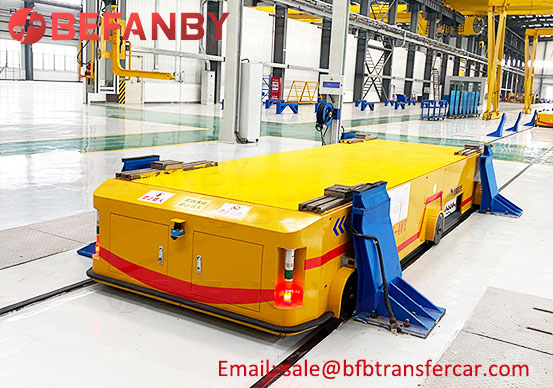
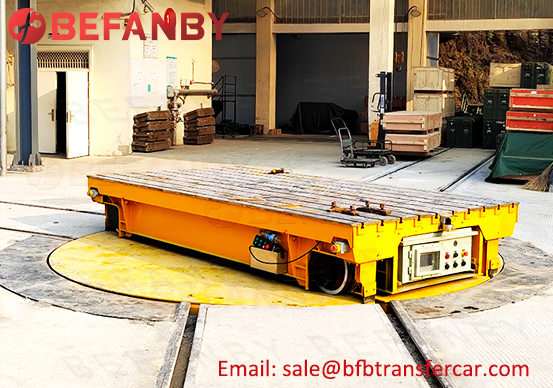
Technological advancement has emerged as the primary driving force behind the industry's growth; currently, rail guided electric transfer carts are evolving rapidly toward greater intelligence and customization. On one hand, high-end models now integrate advanced technologies—such as LiDAR and PLC-based interlocking controls—enabling seamless integration with factory MES and WMS systems to facilitate automated scheduling and route planning. Certain models even allow a single operator to manage multiple units simultaneously, thereby further boosting transfer efficiency. On the other hand, the localization rate of core components continues to rise, with the performance of critical parts—such as motors and controllers—undergoing continuous optimization to achieve an average Mean Time Between Failures (MTBF) exceeding 8,000 hours. Additionally, manufacturers can now offer customized models—featuring explosion-proof, corrosion-resistant, or high-temperature-resistant capabilities—tailored to meet specific client requirements and adapt to complex industrial environments. Concurrently, industry competition is intensifying; the market now comprises both specialized manufacturers focused exclusively on rail guided electric transfer carts and diversified equipment manufacturers venturing into this domain. As product homogenization becomes increasingly apparent, manufacturers are actively striving to bolster their core competitiveness through technological innovation and customized service offerings.
Despite certain limitations—such as high rail installation costs, difficulties in adjusting routes, and restricted travel speeds—rail guided electric transfer carts remain indispensable handling equipment in heavy industrial settings, thanks to their core strengths: heavy-load capacity, operational stability, and inherent safety. Looking ahead, as smart manufacturing technologies become deeply integrated with rail guided electric transfer carts, the systems will overcome existing technical bottlenecks, optimize product performance, and reduce initial investment costs. Furthermore, driven by the global wave of industrial digitalization and smart upgrades, the export potential for these carts in overseas markets is poised for continued expansion. Ultimately, rail guided electric transfer carts will continue to empower industrial logistics by facilitating efficient, safe, and eco-friendly material handling, thereby serving as a vital pillar supporting the broader transformation toward intelligent industrial operations.